Don't Buy Until You Read This: Logicmonitor vs Tp Link Eap725 Wall Access Point
When planning or upgrading a network, buyers often face a choice between buying visible hardware—like a wall-mounted access point—and investing in the software and services that monitor and manage that infrastructure. This article examines two very different products that commonly appear in procurement conversations: LogicMonitor, a cloud-based infrastructure monitoring platform, and the TP‑Link EAP725 Wall Access Point, a wall-plate Wi‑Fi access point designed for hospitality and multi-room deployments. They are not direct substitutes; rather, they represent two complementary investments. Understanding what each delivers, what buyers care about, and how to pair them effectively is essential before spending money.
Introduction
Networks are composed of physical devices and the software that keeps them observable and reliable. A wall access point is a tangible improvement to wireless coverage and user experience. A monitoring platform is the nervous system that spots issues, trends, and failures across devices. Organizations considering upgrades should weigh short-term benefits like coverage and immediate throughput against long-term operational benefits such as downtime reduction, capacity planning, and proactive maintenance.
This comparison breaks down both products by purpose, deployment, management, cost considerations, and typical real-world uses so buyers can decide whether they need one, both, or a different approach entirely.
Product Overviews
LogicMonitor — What it is and why it matters
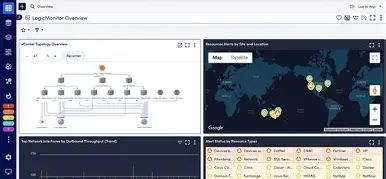
LogicMonitor is a software-as-a-service (SaaS) platform focused on infrastructure and application performance monitoring. It provides discovery, alerting, dashboards, and analytics for networks, servers, cloud services, and many types of devices. LogicMonitor’s value proposition is that it centralizes visibility: instead of logging into each device, administrators see metrics, trends, and alerts from a single pane of glass. That visibility supports faster troubleshooting, SLA compliance, capacity planning, and often fewer emergency on-site visits.
Typical buyers include IT operations teams, managed service providers (MSPs), and enterprises that need continuous monitoring for large or distributed environments. LogicMonitor integrates with ticketing systems, notification channels, and automation tools to make alerts actionable.
TP‑Link EAP725 Wall Access Point — What it is and why it matters
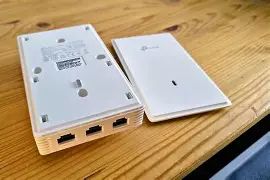
The TP‑Link EAP725 Wall Access Point is a wall-plate form factor wireless access point intended for installation in guest rooms, dormitories, offices, or anywhere a discreet, in‑room AP is preferred. Wall APs save space and present a neat, user-facing interface for wired and wireless connectivity without relying on ceiling-mounted hardware.
Buyers typically choose a wall AP when they need predictable coverage per room, easy wired connectivity for a desktop or smart TV, and an aesthetic that blends with interiors. Wall APs are common in hotels, student housing, assisted-living facilities, and multi-tenant buildings where each room needs reliable independent connectivity.
Detailed Analysis: How They Compare (and How They Don’t)
At first glance, a monitoring platform and a wall access point appear unrelated — one is software, the other hardware. The most useful way to compare them is by looking at the problem each solves for a buyer.
Primary function
- LogicMonitor: Observability and proactive alerting across the entire IT stack — networks, servers, cloud services, and applications.
- TP‑Link EAP725: Provide localized wireless and wired connectivity from a wall outlet, improving coverage and user experience in a specific physical space.
Deployment and management
Deployment models differ sharply. A wall AP is physically installed, cabled (typically to PoE switches), and optionally managed via a controller (often TP‑Link’s management software). LogicMonitor is deployed by configuring device discovery, installing collectors/agents if needed, and setting up dashboards and alert rules. Management for the AP is device- or controller-level; management for LogicMonitor covers the fleet and patterns across devices.
Scale and visibility
Buying dozens or hundreds of wall APs scales coverage but not visibility. Scaling that hardware without central monitoring makes troubleshooting slow: which AP is overloaded? why are guests reporting dropouts? LogicMonitor addresses that by aggregating telemetry across many devices — including APs — to surface trends and problem areas.
Looking for the best Electronics deals on Amazon?
Shop Amazon →Security and compliance
A wall AP’s role in security is limited to supported features: client isolation, VLAN tagging, WPA3 support (if present), and firmware updates. LogicMonitor contributes to security posture by detecting anomalies (unexpected device behavior, unusual latency) and integrating with SIEM or remediation tools. For compliance reporting, a monitoring tool is often essential because it stores logs and historical trends required for audits.
Cost considerations
Hardware purchases are a visible capital expense with predictable unit pricing and life cycles. SaaS monitoring is an operational expense that scales with devices and features. Buyers should consider total cost of ownership — hardware replacement cycles, support contracts, monitoring subscriptions, and the cost of downtime that good monitoring can avoid.
Pros & Cons
LogicMonitor
- Pros:
- Comprehensive visibility across heterogeneous environments (on‑prem, cloud, hybrid).
- Proactive alerting and historical metrics for troubleshooting and capacity planning.
- Integrations with ticketing, chat, and automation tools to accelerate remediation.
- Reduces mean time to resolution (MTTR) by centralizing diagnostics.
- Cons:
- Ongoing subscription cost; pricing scales with device count and features.
- Requires initial configuration and tuning to avoid alert fatigue.
- May need additional permissions or agents to reach full visibility in some environments.
TP‑Link EAP725 Wall Access Point
- Pros:
- Clean, room‑level Wi‑Fi coverage in a compact, wall‑plate form factor.
- Often includes PoE support and wired ports for in‑room devices.
- Easy to deploy in multi‑room properties and aesthetically pleasing compared with ceiling APs.
- Can be managed centrally if used with a vendor controller or management platform.
- Cons:
- Coverage limited to the immediate room; more units are required for broad coverage.
- Hardware replacement/upgrade cycles and firmware maintenance are necessary.
- On its own, it offers no cross‑site visibility for IT operations beyond local status.
Comparison Table
| Aspect | LogicMonitor | TP‑Link EAP725 Wall Access Point |
|---|---|---|
| Primary function | Cloud-based infrastructure and application monitoring | In-room wireless and wired connectivity (wall-plate AP) |
| Deployment | SaaS with on-prem collectors/agents as needed | Physical installation in wall outlet; PoE power typical |
| Management | Centralized dashboards, alerts, integrations | Local device or controller-based management; firmware updates |
| Scale | Scales horizontally to thousands of devices via subscription | Scales by increasing number of physical units per room/area |
| Best for | IT ops, MSPs, enterprises needing observability and SLA tracking | Hotels, dorms, offices wanting neat in-room Wi‑Fi and wired ports |
| Cost model | Operational (subscription) | Capital (hardware) plus optional management software |
| Complementary? | Yes — monitors AP health, client loads, and network KPIs | Yes — provides the physical endpoints monitored by tools |
Buying Guide: How to Decide
Rather than asking which one is better, buyers should ask first: what problem needs solving now and what problems should be preventable in the future? Use the checklist below to guide purchasing decisions.
1. Identify the core problem
- If the primary issue is intermittent Wi‑Fi coverage or user experience in rooms, prioritize access points and a proper wireless design.
- If the challenge is repeated outages, unclear root causes, or scaling operations across sites, prioritize a monitoring platform.
2. Consider scale and future growth
Small single-site deployments may get by with a few wall APs and local management. Multi-site or rapidly growing environments benefit from both centralized device management and a monitoring system to correlate incidents across locations.
3. Budget planning — CAPEX vs OPEX
Hardware like wall APs is a capital purchase with predictable depreciation. SaaS adds ongoing operating costs but can reduce staffing or emergency contractor expenses by enabling remote diagnosis. Factor both into a three- to five-year total cost of ownership (TCO) analysis.
4. Management and staffing
Who will run the network? If a small in‑house team manages a handful of devices, vendor controller software and occasional manual checks might suffice. Larger teams or MSPs require an observability platform to automate alerting and reporting.
5. Look for interoperability
Ensure the AP supports required features — VLAN tagging, guest network isolation, management protocols, and power via PoE. For LogicMonitor, verify support for the vendor APIs, SNMP, syslog ingestion, and any cloud services in use. Compatibility reduces custom integration work.
6. Security and compliance needs
If compliance or auditability is a priority, a monitoring platform that retains historical metrics and logs is invaluable. If regulatory frameworks require network segmentation and device hardening, confirm the AP’s security features and update cadence.
7. Real‑world testing
Before a large purchase, run a pilot: deploy a small number of APs in representative rooms and/or trial a monitoring platform on a subset of infrastructure. Real traffic and real support scenarios expose gaps that datasheets miss.
Looking for the best Electronics deals on Amazon?
Shop Amazon →Real‑World Use Cases and What Buyers Typically Care About
Hospitality and Multi‑Dwelling Units
Hotels and student housing prioritize predictable per-room connectivity, simple guest onboarding, and minimal visual disruption. Wall APs like the EAP725 are attractive because they place both Wi‑Fi and wired ports directly in the room. Buyers care about ease of provisioning, guest isolation, and the ability to monitor per-room performance across the property — where a monitoring platform becomes useful to spot congested APs or failing uplinks.
Small and Medium Businesses (SMBs)
SMBs often prioritize cost and simplicity. A few wall APs may solve coverage problems immediately, but as services move to cloud and dependence on uptime increases, the ability to see trends (latency spikes, saturated uplinks) via a monitoring solution becomes a business enabler. Buyers in this space frequently ask about licensing flexibility and whether they can start small and grow organically.
Enterprises and Managed Service Providers
Enterprises and MSPs prioritize scalability, automation, and compliance. They will invest in monitoring platforms to oversee thousands of endpoints and integrate with ITSM workflows. Wall APs are purchased for specific use cases (e.g., hotels owned by enterprise landlords, healthcare patient rooms) and are instrumented into the monitoring stack for proactive maintenance.
Education and Healthcare
These sectors care about predictable connectivity and regulatory compliance. For example, a dormitory needs per-room connectivity and the ability to quickly identify overloaded APs during move-in week; a monitoring platform helps plan capacity and avoid service disruptions during peak periods.
Putting It Together: When to Buy Which
For most realistic deployments, the question is not LogicMonitor vs TP‑Link EAP725. It is whether to invest in hardware without observability, or to pair hardware purchases with the monitoring and management tools needed to operate them at scale.
- If the immediate problem is coverage in a small number of rooms: buy the APs first and plan for monitoring later.
- If outages and undefined performance problems affect operations across multiple sites: prioritize a monitoring solution that can quickly reveal root causes, then add/replace APs guided by telemetry.
- If budget permits, pair hardware purchases with a monitoring pilot to validate that new APs resolve client experience problems and to ensure proactive alerting for firmware or connectivity issues.
Conclusion
LogicMonitor and the TP‑Link EAP725 Wall Access Point serve fundamentally different but complementary roles. The EAP725 addresses the tangible need for in‑room wireless and wired connectivity, while LogicMonitor provides the visibility and context necessary to operate and scale networks reliably. Buyers must match their investments to the problems they face: immediate coverage gaps call for hardware, persistent or cross-site reliability challenges call for observability, and most mature deployments benefit from both.
Making the right choice requires a clear understanding of current pain points, realistic growth plans, and the operational discipline to maintain devices and observability over time. When chosen and configured thoughtfully, wall APs and monitoring platforms together reduce downtime, improve user experience, and make network operations far more predictable.