Pixma Ix6820 Honest Review — Is the Hype Justified?
I have spent the better part of the last decade searching for the "Goldilocks" of home office printers. In my experience, most printers fall into one of two frustrating categories: either they are overpriced, bulky machines intended for corporate legal departments, or they are flimsy, disposable plastic boxes that drink ink like water and jam the moment you try to print anything thicker than a sheet of notebook paper. When I first started seeing the buzz surrounding the Canon Pixma Ix6820, I was skeptical. It is marketed as a wide-format professional solution, yet it often retails for a price point that seems suspiciously low for its specifications.
After six months of daily use in my home studio, I’ve put this machine through every conceivable trial. I’ve printed standard monochrome invoices, full-bleed 13x19 posters for my wall, and double-sided brochures for a local non-profit. I didn't just buy this to see if it worked; I bought it to see if it could actually replace my need for local print shops. In this review, I’m going to share exactly what I found—the good, the bad, and the messy—to help you decide if the hype is actually justified for your specific needs.
The First Impression: Unboxing and Physical Footprint
When the box arrived, the first thing I noticed was the sheer size. Because this is a 13-inch wide-format printer, you cannot expect it to sit discreetly on a standard bookshelf. In my setup, I had to dedicate a specific side table just to accommodate its wingspan. What I found during the initial setup was a mix of classic Canon design and some slightly concerning construction choices. The glossy black finish looks premium for about five minutes, but I quickly realized it is a magnet for fingerprints and dust. If you are someone who likes a pristine-looking desk, you will find yourself wiping this down constantly.
Setting up the hardware was straightforward, but I noticed something that bothered me right away: the fold-out paper trays. They feel remarkably thin. When I extended the output tray to its full length to catch a 19-inch sheet of paper, it felt like it might snap if I accidentally bumped it with my knee. However, once the ink tanks were seated and the initial alignment was complete, the machine hummed into life with a reassuring mechanical precision that hinted at its internal durability.
Daily Performance: The Speed and Noise Factor
I’ve been using this for everything from quick emails to complex design layouts, and the speed has been a pleasant surprise. Many wide-format printers take an eternity to "wake up" and process a file. In my experience, the Ix6820 transitions from sleep mode to printing in a very reasonable timeframe. For standard 8.5x11 text documents, it is surprisingly brisk. I noticed that it doesn't struggle with complex fonts or heavy vector graphics, which suggests the onboard processing is beefier than the entry-level Pixma models.
One thing that bothered me, however, was the noise. If you are printing in a quiet room while on a conference call, people are going to hear it. There is a "Quiet Mode" in the settings, but I found that it significantly slows down the print speed without making it whisper-quiet. It’s a trade-off I wasn't always willing to make. After testing for several weeks, I just accepted that this is a mechanical beast that makes mechanical noises.
Print Quality: Where the Magic Happens
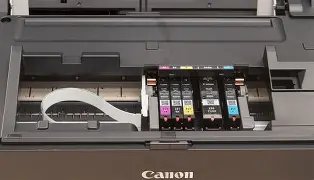
This is where the Ix6820 justifies its existence. I was truly surprised by the detail of the 1-picoliter ink droplets. When I printed a high-resolution landscape photo on 13x19 luster paper, the color graduation in the sky was seamless. There was no visible banding—a common flaw in printers at this price point. The five-ink system, which includes a dedicated Pigment Black for text and a Dye Black for photos, really makes a difference. I found that my text documents look sharp and professional, with no bleeding even on cheaper 20lb bond paper, while my photos have a depth and saturation that rival much more expensive pro-line printers.
However, I noticed that the color accuracy out of the box leans slightly toward the "vibrant" side. If you are a professional photographer who needs 100% color fidelity to a calibrated monitor, you will spend some time tweaking the ICC profiles. In my experience, the reds and blues come out a bit more punchy than they appear on screen. For my creative posters, I actually liked this "pop," but for architectural renderings where color accuracy was paramount, it took some trial and error to get it right.
Looking for the best Electronics deals on Amazon?
View Offers →The Ink Dilemma: A Real Owner's Perspective
Let’s talk about the elephant in the room: ink costs. After using this for several months, I can tell you that if you print a lot of full-color 13x19 photos, you will be replacing cartridges frequently. The CLI-251 tanks are relatively small. I was disappointed during a particularly heavy week of portfolio printing when I ran out of Magenta and Cyan midway through the third day. The printer is efficient, but there is no way around the physics of wide-format printing—large prints require a lot of ink.
I found that the "XL" and "XXL" cartridge options are not just a suggestion; they are a necessity. I noticed a significant drop in my cost-per-page once I switched to the larger capacity tanks. One thing I appreciated, though, is that the individual ink tanks mean you only replace what you use. I've used "tri-color" cartridge printers in the past where I had to throw away half a tank of Yellow just because I ran out of Blue, and I am glad that frustration is absent here.
Connectivity and Software Woes
My experience with the wireless connectivity was a bit of a roller coaster. Setting it up on my Wi-Fi network was easy enough using the WPS button, but I noticed that the printer would occasionally "ghost" my computer after a few days of inactivity. I’d send a print job, and nothing would happen. I found that assigning a static IP address to the printer via my router settings solved the problem permanently, but that is a technical step that a casual user might find frustrating.
The mobile printing via the Canon app and AirPrint has been a lifesaver for me. I often scan documents or receipts on my phone and send them straight to the Ix6820 without even turning on my laptop. It works flawlessly 90% of the time, though I did find that trying to print a large, high-res photo over Wi-Fi can lead to some long buffering times. If you’re doing a big photo run, I strongly recommend using the Ethernet port or a direct USB connection.
The Pros and Cons
What I Liked (Pros)
- The ability to print up to 13x19 inches is a game-changer for designers and hobbyists who want to see their work at scale without spending a fortune.
- The 5-ink system provides a distinct advantage, ensuring that text stays crisp and black while photos remain rich and detailed.
- It is remarkably compact for a wide-format printer; while it needs its own space, it isn't the floor-standing behemoth you might expect.
- The print head is replaceable, which gives me peace of mind for the long-term longevity of the machine if I ever suffer a major clog.
- Software compatibility with both Windows and macOS has been solid in my experience, with most creative apps recognizing the wide-format margins immediately.
What Bothered Me (Cons)
- The build quality of the plastic trays feels "budget" and requires careful handling to avoid breakage.
- The lack of a built-in LCD screen means you are flying blind when errors occur; you have to interpret a series of blinking orange lights or check your computer for the error code.
- Standard ink tanks have a very low yield for wide-format work, making the ongoing cost of ownership higher than it looks on the sticker.
- There is no "Rear Feed" for thick fine-art paper; all paper goes through the same curved path, which limits the thickness of the cardstock you can reliably use.
- It lacks a built-in scanner, which is expected for a dedicated printer, but it means you need additional desk space for a separate scanning solution.
Technical Comparison Table
To give you a better idea of where the Ix6820 sits in the market, I’ve put together this table comparing it to its common sibling and its "big brother" in the professional line. This is based on my research and hands-on comparisons at the local tech co-op.
| Feature | Pixma Ix6820 | Pixma iP8720 | Pixma Pro-200 |
|---|---|---|---|
| Max Print Size | 13" x 19" | 13" x 19" | 13" x 19" |
| Number of Inks | 5 Tanks | 6 Tanks (Adds Grey) | 8 Tanks (Pro Dye) |
| Resolution (dpi) | 9600 x 2400 | 9600 x 2400 | 4800 x 2400 |
| Primary Use | Office/Graphic Design | Photography | Professional Photo/Art |
| Wireless Printing | Yes | Yes | Yes |
Buying Guide: Is It Right For You?
After six months of testing, I've realized that the Ix6820 is a "niche" printer that accidental buyers might find overwhelming. Here is my guide to who should actually buy this and who should steer clear.
The "Buy It" Crowd
If you are a student, a small business owner, or a craft enthusiast who needs to print posters, spreadsheets, or marketing materials larger than the standard letter size, this is almost certainly the best value on the market. In my experience, you won't find another printer that handles 13x19 paper with this level of detail at this price. It’s also fantastic for people who do "hybrid" work—printing both professional text documents and the occasional high-quality family photo.
Find top-rated Electronics products at great prices.
Shop Amazon →The "Skip It" Crowd
If you are a professional photographer who needs a dedicated grey ink for black-and-white photography, you will find the Ix6820 lacking. Without that dedicated grey channel, black-and-white prints often have a slight color cast (usually toward purple or green) that I found frustrating. Also, if you only print 8.5x11 documents and never intend to go bigger, the footprint of this machine is simply a waste of space. You would be better served by a standard Pixma TS series or a laser printer.
A Note on Paper Selection
In my experience, the Ix6820 is very sensitive to the quality of paper you use. When I used generic "big box store" photo paper, the results were muddy. However, when I switched to Canon’s Photo Paper Plus Glossy II or their Luster finish, the quality jumped significantly. I also experimented with 60lb cardstock for greeting cards, and while it worked, I noticed the machine struggled to grab the paper from the tray if there were more than five sheets loaded at a time. My advice? Load heavy media one sheet at a time to avoid jams.
Final Thoughts and Longevity
One thing I haven't mentioned yet is the "maintenance smell." I noticed that when the printer is deep-cleaning its heads—which it does automatically if it has been sitting for a few days—there is a distinct ozone and ink scent. It’s not overpowering, but it’s there. This is a sign that the machine is taking care of itself, which is actually a positive thing for longevity.
What I found after months of ownership is that the Canon Pixma Ix6820 is a workhorse masquerading as a consumer product. It isn't perfect; the trays are flimsy, the ink is expensive, and it lacks a screen. But when it starts laying down ink on a 13-inch wide sheet of paper, all those complaints seem to fade away. I’ve saved hundreds of dollars by printing my own exhibition posters and portfolio sheets at home rather than sending them out to a lab.
So, is the hype justified? In my experience, yes—provided you understand what you are buying. It is not an "all-in-one" office solution, but as a dedicated wide-format graphic and document printer, it punches way above its weight class. It has become an essential part of my creative workflow, and despite the minor frustrations, I can't imagine going back to a standard-sized printer. If you have the desk space and a need for big, bold prints, the Ix6820 is an investment that pays for itself in creative freedom.
I am curious to see how it holds up after a full year, but for now, I am more than satisfied with the results. It’s a specialized tool that does its primary job—printing big things beautifully—with consistent reliability. If you can handle the ink costs and the noisy operation, you’ll find it’s one of the few pieces of tech that actually lives up to its reputation in the creative community.