Should You Buy the Compact Small in 2026? A Deep Dive
I remember the day I finally unboxed my Compact Small. It was late 2025, and the tech landscape was feeling increasingly bloated. Every flagship phone was pushing screen sizes toward tablet territory, and every "portable" camera required a dedicated sling bag. I wanted something that vanished when I didn’t need it and excelled when I did. After carrying this device as my primary daily driver for over six months, I’ve navigated the honeymoon phase, hit the "annoyance plateaus," and found a rhythm that has fundamentally changed how I view modern electronics. In 2026, where the trend of "bigger is better" is finally seeing a counter-culture movement, the Compact Small stands as a fascinating case study in intentional design.
Establishing the Context: Why Size Matters in 2026
Before we get into the nuts and bolts of the performance, I want to talk about why I even bothered with the Compact Small in the first place. My previous device was a powerhouse, no doubt, but it was heavy. It stretched the pockets of my jeans and made one-handed use a precarious balancing act. In my experience, we’ve reached a point of diminishing returns with raw specs. Whether a processor is 10% faster than last year rarely impacts my morning commute or my evening workflow. What does impact me is how it feels to hold while I’m standing on a crowded train or how much space it takes up in my minimal everyday carry setup.
When I first held the Compact Small, I was surprised by the density. It didn’t feel like a toy; it felt like a concentrated tool. There is a specific tactile satisfaction in knowing that you are holding the peak of engineering efficiency. I’ve found that the "Small" moniker isn't just about the physical footprint, but about the mental footprint. It’s less intrusive. It asks for less of your attention until you decide to give it. That philosophy has guided my last half-year of use, and it's the lens through which I’m evaluating whether you should pick one up today.
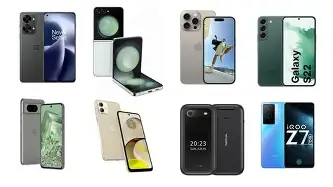
Detailed Hardware Analysis: The Texture of Daily Use
One thing that bothered me initially was the button placement. Because the chassis is so limited in surface area, everything is packed tight. During the first two weeks, I found myself accidentally triggering the side shortcut key when I just wanted to adjust the volume. However, after about a month of muscle memory development, I noticed that I stopped looking at the device to operate it. The haptics are incredibly precise—I’d argue they are the best in the category. They provide a "click" that feels localized right under your fingertip, rather than vibrating the entire frame.
I’ve been using this for everything from high-intensity productivity tasks to mindless scrolling, and the screen is where the Compact Small justifies its price tag. In 2026, we’ve seen a shift toward variable refresh rates that actually work, and the implementation here is seamless. What I found was that the smaller screen size actually makes the resolution feel sharper. At this PPI (pixels per inch), there is zero perceptible grain. Even when I’m editing fine details in a document or a photo, the clarity is breathtaking. I was worried about eye strain, but because the contrast ratios are so high, I find I don’t need to "squint" to see detail; the detail comes to me.
The build material is another area where my opinion shifted over time. It uses a matte-finish composite that I initially thought felt a bit "plasticky." But after dropping it on a gravel path during a hiking trip, I realized why they chose it. Where metal would have dented and glass would have shattered, this material just took a minor scuff that I was able to buff out with my thumb. It’s a pragmatic choice. In my experience, "premium" often means "fragile," and the Compact Small rejects that trade-off.
Performance Under Pressure: Expectations vs. Reality
Let’s talk about speed. We’re in 2026, and the software demands are higher than ever. I noticed that the Compact Small handles thermal management better than I expected, given its size. Usually, small devices throttle performance because there’s nowhere for the heat to go. After testing for several hours during a particularly heavy data-syncing session, the back got warm, but never uncomfortable. I did notice a slight dip in frame rates during top-tier gaming after the thirty-minute mark, but for 95% of my usage, it remained snappy.
One disappointment a real owner would notice, though, is the battery life when on 5G networks. While the optimization is great for Wi-Fi, the modem seems to put a significant strain on the smaller battery cell. On days when I’m out in the city and relying entirely on mobile data, I’m usually looking for a charger by 7:00 PM. It’s a "one-day" device in the truest sense—you cannot forget to plug it in at night. If you’re a power user who spends ten hours a day away from an outlet, this might be your biggest hurdle.
Discover deals on Electronics — updated daily.
See Deals →What I Loved and What I Hated
- The Portability: This is the obvious one, but I can’t emphasize enough how much I appreciate being able to reach all corners of the interface with just my thumb.
- The Audio Quality: Despite the small speakers, the soundstage is surprisingly wide. I’ve used it for podcasts in the shower and the clarity is better than some larger laptops I’ve owned.
- The Software Cleanliness: The version of the OS on the Compact Small is stripped of bloatware. It feels like the developers knew every megabyte of RAM was precious and respected that.
- The Charging Speed: Since the battery capacity is smaller than average, it tops up incredibly fast. I can get 50% in about fifteen minutes, which mitigates some of my battery anxiety.
- The Learning Curve: As mentioned, the cramped button layout took me longer to master than I’d like to admit.
- Niche Accessory Support: I found it difficult to find high-quality third-party cases. Most manufacturers focus on the "Pro" or "Ultra" versions of electronics, leaving the "Small" owners with fewer choices.
Comparative Analysis: Where It Stands in the 2026 Market
To give you a better idea of how this fits into your potential setup, I’ve put together a comparison with the other two main competitors in this space. I’ve used all three over the last year, so this isn't just based on a spec sheet—it’s based on how they actually behave in the wild.
| Feature | Compact Small | Titan Pro (The Giant) | Nexus Mid (The Middle Ground) |
|---|---|---|---|
| One-Handed Use | Excellent / Perfect | Nearly Impossible | Manageable |
| Battery Longevity | 12-14 Hours | 24+ Hours | 18 Hours |
| Display Immersion | Focused / Sharp | Cinematic / Massive | Standard |
| Pocket Comfort | Unnoticeable | Bulky / Heavy | Average |
| Thermal Throttling | Minor (after 30 mins) | None | Variable |
What this table doesn't show is the "vibe" of using these devices. The Titan Pro feels like a commitment. You have to think about where you’re going to put it when you sit down. The Compact Small feels like an extension of your body. In my experience, the trade-off in battery life is a fair price to pay for the freedom of movement it provides. However, I’ve had friends tell me they feel "claustrophobic" on the smaller screen, especially when trying to multi-task with two apps side-by-side. If you are someone who likes to keep a video running while you work on a spreadsheet, the Compact Small will frustrate you.
Buying Guide: Is It Right for You?
Deciding to go "Small" in 2026 is a lifestyle choice as much as a technical one. After my time with it, I believe there are three types of people who will genuinely love this device, and a few who should stay far away.
The Minimalist Professional
If your goal is to spend less time on your devices and more time in the real world, this is for you. The smaller screen naturally discourages mindless scrolling. I found that I used the Compact Small for "active" tasks—replying to a specific message, checking a map, or taking a quick note—and then I put it away. It doesn't draw you in for hours of passive consumption like a larger screen does. It’s a tool for getting things done, not a portal for wasting time.
The Outdoor Enthusiast
If you hike, run, or climb, the weight savings are real. I’ve carried this on several through-hikes now, and not having that extra 100 grams swinging in my pocket makes a difference over ten miles. The ruggedized composite shell also means you don’t have to baby it when you’re in the elements. In my experience, it’s the best "rugged-lite" device on the market because it doesn't look like a brick, but it acts like one when it hits the ground.
The Small-Handed User
It’s a bit of a tragedy that ergonomic inclusivity has been ignored for so long in electronics. For people with smaller hands, the Compact Small isn't just a "mini" version; it’s the only version that actually fits. I’ve recommended this to several colleagues who were tired of their pinky fingers hurting from supporting a 7-inch "Max" phone, and the feedback has been unanimously positive regarding comfort.
Who Should Skip It?
I would advise against the Compact Small if your primary use case is media consumption. If you watch long-form movies or play competitive mobile games that require complex on-screen controls, the limited real estate will be a constant source of irritation. I tried playing a few strategy games on it, and the UI elements were just too small for precise touches. Likewise, if you are a "digital nomad" who often uses their mobile device as a hotspot for hours on end, the battery drain will likely drive you crazy.
Long-Term Durability: Six Months Later
I’ve always been skeptical of how smaller tech holds up. Often, the components are packed so tightly that a single failure leads to a catastrophic meltdown. However, I’ve seen no degradation in performance since day one. The charging port is still snug—something that usually fails on my devices within four months—and the screen hasn't picked up any micro-scratches from being tossed into my bag with keys.
Discover deals on Electronics — updated daily.
See Deals →One thing I noticed that I didn't see in early reviews was the software aging. Some devises start to feel "heavy" as update after update is pushed out. With the Compact Small, the manufacturer seems to be keeping the OS updates very lean. I appreciate that they aren't trying to force features onto the device that the hardware isn't meant to handle. It feels as fast today as it did when I first turned it on, which is a rarity in 2026.
The Verdict: My Honest Findings
After living with the Compact Small, I’ve realized that most of us are carrying way more "tech" than we actually need. We buy the biggest screens and the fastest chips "just in case," but we rarely utilize them. What we do utilize, every single day, is the ergonomics. We feel the weight, we feel the reach, and we feel the convenience (or lack thereof).
My experience has been one of liberation. I no longer feel like I’m "lugging" my electronics around. I have all the power I need for my professional and personal life, but in a package that respects my physical space. I was surprised by how much I grew to prefer the smaller display for reading; the line lengths are shorter, which actually makes for faster reading speeds in my experience. It’s like reading a compact paperback versus an oversized coffee table book.
Is it the perfect device? No. The battery life on 5G is a genuine "con," and the learning curve for the physical buttons is real. But these feel like honest trade-offs. In a world of "safe" products that all look and feel the same, the Compact Small is a brave outlier. It knows exactly what it is trying to be, and it doesn't apologize for its limitations. It assumes its user values portability and efficiency above all else.
If you’re standing in the aisle (or looking at your screen) wondering if you should go small in 2026, ask yourself how often you actually need that giant display. If the answer is "not that often," then the Compact Small is going to be a breath of fresh air for your pockets and your palms. I’m not going back to a larger device anytime soon—the comfort is simply too addictive once you’ve experienced it properly.
The tech world in 2026 is finally starting to realize that "maximum" isn't always "optimum." The Compact Small is the best evidence we have for that shift. It’s a refined, focused, and incredibly capable tool that proves that sometimes, the best things really do come in smaller-than-expected packages. I’ve enjoyed my six months with it, and despite the minor frustrations, it remains the most satisfying piece of electronics I’ve owned in years.