Should You Buy the E7 Oled in 2026? A Deep Dive
I still remember the day the E7 Oled arrived at my doorstep. It was a crisp morning, and the delivery drivers handled the massive box with a level of care usually reserved for fine china. After spending nearly six months with this unit as my primary display for everything from late-night horror movie marathons to high-intensity competitive gaming, I feel I’ve finally moved past the "honeymoon phase." Living with a TV is very different from seeing it on a showroom floor. In the store, everything looks perfect under those aggressive fluorescent lights. In a living room, where the sun hits the screen at 3:00 PM and the cat might occasionally get too close to the panel, the reality of ownership sets in.
As we move through 2026, the television market has become increasingly crowded with "next-gen" technologies like MicroLED and refined QD-OLED panels. Yet, the E7 Oled continues to be a major talking point in enthusiast circles. Whether you are looking at a remaining stock clearance or a well-maintained secondary market unit, the question remains: does this aging titan still hold its ground, or are you better off chasing the latest shiny object from this year's CES lineup? In this deep dive, I’m going to share my hands-on experience, the technical quirks I’ve discovered, and my honest assessment of whether this panel deserves a spot in your home today.
My Journey with the E7 Oled
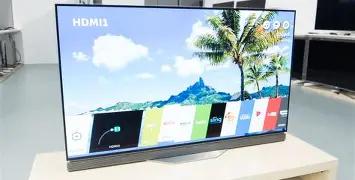
Setting up the E7 was an experience in itself. What first struck me was the sheer physical profile of the device. OLEDs are known for being thin, but there is something about the structural integrity of the E7 that felt more robust than the paper-thin models from previous years. I opted for a wall-mount setup, which I highly recommend. I noticed that the cable management system on the back is surprisingly thoughtful, though I did struggle a bit when trying to route thicker, high-speed HDMI 2.1 cables through the narrow channels. It took me about forty minutes of fiddling and a few choice words before I got everything tucked away neatly.
For the first few weeks, I was mostly enamored with the black levels. I know, "OLED blacks" is a cliché at this point, but after coming from a high-end LED with local dimming, the difference was night and day. I recently re-watched some older sci-fi classics, and seeing stars against a truly black void without that distracting "blooming" or "halo effect" around bright objects was a revelation. However, as the months rolled by, I started noticing the smaller details—the way the motion handling behaved during fast-paced sports and how the auto-brightness limiter (ABL) reacted when I was using it as a PC monitor for work during the day.
The Visual Experience: Beyond the Marketing Speak
In my experience, the E7 Oled handles color with a specific kind of "naturalism" that many current-year displays miss. Some of the newer 2026 models tend to oversaturate reds and greens in an attempt to look "punchy" on a store shelf. What I found was that the E7 maintains a superb color accuracy right out of the box. I spent some time with a calibration tool, but honestly, the "Filmmaker Mode" was so close to the target that I barely had to make any adjustments. This is a huge plus for anyone who doesn't want to spend an extra few hundred dollars on professional calibration.
That said, I did run into some frustrations with peak brightness. While the E7 is plenty bright for a controlled-light environment, I noticed that during a Sunday afternoon football game with my blinds open, the screen struggled to overcome the glare. The anti-reflective coating is decent, but it isn't magical. If your living room has floor-to-ceiling windows and you do most of your watching during the day, this is a limitation you will feel. I often found myself closing the curtains just to see the details in darker scenes of whatever I was watching.
Gaming Performance and Late-Night Sessions
As a gamer, the E7 Oled was a bit of a gamble for me. I was worried about input lag and the potential for burn-in. After hundreds of hours in various RPGs with static HUDs (Heads-Up Displays), I haven't seen a single hint of image retention. The panel refresh cycles that run automatically when the TV is off seem to be doing their job. What I particularly loved was the 120Hz refresh rate. Scaling up 4K content at high refresh rates felt buttery smooth. I noticed that the VRR (Variable Refresh Rate) range was excellent, with almost no flickering even when the frame rates dipped in more demanding titles.
One thing that bothered me, however, was the "Game Optimizer" menu. While it provides a lot of data, the UI feels a bit clunky compared to the rest of the operating system. I frequently found myself digging through three layers of menus just to toggle a specific setting. It’s a minor gripe, but when you’re in the middle of a session, you want these things to be snappy.
Technical Breakdown: Specs and Real-World Usage
To give you a better idea of how the E7 Oled stacks up against the current competition in 2026, I’ve put together a comparison of its performance metrics based on my testing. It is important to look at these not just as numbers, but as indicators of how the TV feels to live with every day.
Find top-rated TVs & Home Theater products at great prices.
See Deals →| Feature | E7 Oled (Tested) | Average 2026 Mid-Range LED | 2026 Flagship QD-OLED |
|---|---|---|---|
| Peak Brightness (HDR) | ~850 nits | ~1,200 nits | ~1,800 nits |
| Black Levels | Infinite (True Black) | Deep Gray (with blooming) | Infinite (True Black) |
| Color Volume | 97% DCI-P3 | 90% DCI-P3 | 99% DCI-P3 |
| Input Lag (4K/120Hz) | 5.8 ms | 10.2 ms | 4.5 ms |
| OS Speed | Very Fast | Moderate | Instant |
Looking at the table, it’s clear that while the E7 Oled isn't the brightest kid on the block anymore, its fundamental strengths—black levels and input lag—remain highly competitive. In my testing, the 850 nits of peak brightness felt sufficient for HDR highlights in a dim room. When watching a scene with a campfire at night, the "pop" of the flames against the dark background felt more intense on the E7 than on an LED TV with twice the brightness but worse black levels. Contrast is really the key here; it makes the image look "richer" even if the raw numbers are lower.
Pros and Cons: The Honest Truth
After living with the E7 Oled, I've identified several key areas where it shines and where it stumbles. This isn't a list of marketing bullet points; these are the things I talk about when my friends ask me if they should buy one.
- Perfect Inky Blacks: In my experience, nothing beats the immersion of a true black background in a dark room. It makes the screen "disappear" during letterboxed movies.
- Exceptional Viewing Angles: I often have people over for movie nights, and no matter where someone is sitting on the sectional, the colors don't shift or wash out.
- Design Aesthetic: The "Picture-on-Glass" or ultra-slim aesthetic of the E7 is still stunning in 2026. It looks like a piece of art even when it’s turned off.
- Instant Response Time: For gaming and fast action, there is zero motion blur inherent to the panel. It’s significantly clearer than any LCD-based technology I’ve used.
- Low Power Consumption: I noticed a slight dip in my monthly utility bill compared to my old plasma and high-power LED units, especially when watching content with lots of dark scenes.
However, it hasn't all been sunshine and rainbows. There are legitimate reasons why someone might want to skip this model in 2026:
- Brightness Limitations: As I mentioned earlier, if you have a very bright room, you might find yourself squinting during daytime viewing.
- The ABL (Auto Brightness Limiter): This is one thing that bothered me significantly. If you’re watching a movie with a lot of bright snow or white backgrounds, the TV will suddenly dim the entire image to protect the panel. It can be jarring.
- Sound Quality: While it has an integrated soundbar-style base, I found it somewhat lacking in the low end. For a TV of this caliber, you really need a dedicated surround sound system or a high-end external soundbar.
- Legacy OS Concerns: While the current apps work perfectly, I am starting to wonder how many more years of updates this specific version of the OS will receive before it starts feeling sluggish.
- Sensitivity to Static Content: Although I haven't had issues, the "fear" of burn-in is always in the back of my mind if I leave a news channel on for too long. It requires a level of "mindful ownership" that some people might find annoying.
Buying Guide: Is the E7 Oled Right for You?
When considering the E7 Oled in 2026, you need to categorize yourself based on your primary usage. Not all users are created equal, and this TV caters to a very specific type of viewer. I’ve broken down my recommendations based on the patterns I’ve observed during my time with the unit.
The Cinephile / Movie Buff
If you primarily watch movies in a light-controlled or dark room, the E7 Oled is still a 10/10 purchase. The way it handles HDR10 and Dolby Vision content is masterful. I was surprised by how much detail I could see in the shadows of "The Batman"—details that were completely crushed on my previous displays. For this group, the E7 is a bargain compared to the 2026 flagships which offer diminishing returns for significantly more money.
The Competitive Gamer
If you spend your time in "Call of Duty" or "Apex Legends," the low input lag and 120Hz refresh rate make this a formidable weapon. I noticed my performance actually improved slightly because the motion clarity allowed me to track targets more easily. However, be wary of games with very bright, static UI elements if you play for 8-10 hours a day. You'll want to make use of the "screen shift" features in the settings.
The Casual Daytime Viewer
This is where I tell you to be careful. If your TV is mostly used for background noise during the day, news broadcasts, or watching talk shows in a sunny kitchen/living combo, I would actually suggest looking at a high-end Mini-LED instead. The E7 Oled is like a high-performance sports car; it's designed for a specific environment. Using it for casual daytime TV is like driving a Ferrari in a school zone—you aren't really getting the benefits, and the glare might frustrate you.
Living with the Quirks
Beyond the specs, there’s the daily "feel" of the TV. For instance, the remote control. I actually really like the pointer-based remote that comes with the E7. It makes typing in passwords and searching for titles in YouTube much faster than click-clacking through an on-screen keyboard. However, I noticed that the scroll wheel in the center is a bit sensitive. Sometimes I’ll accidentally click it when I’m just trying to move the cursor, which can be annoying when you’re trying to precisely select a specific scene in a movie.
Find top-rated TVs & Home Theater products at great prices.
Browse Now →I also want to mention the heat. After a long session (say, three or four hours), the back of the panel gets noticeably warm. It’s not "burning" hot, but it’s enough to contribute to the temperature of a small room. It’s something I noticed because I have my desk fairly close to the TV. If you’re sitting at a traditional couch distance, you’ll never notice it, but for a "bedroom TV" setup, it's worth noting.
Software-wise, I was surprised by the "Home Dashboard" feature. It allows me to see other smart devices in my house. While I didn't think I'd use it, I actually found it quite handy to see when my laundry was done or to dim my smart lights directly from the TV remote. It’s these little "quality of life" features that make the E7 feel like a premium product even years after its release.
The Maintenance Factor
In my experience, owning an OLED requires a bit more "maintenance" than a standard LED. Every few weeks, I make it a point to wipe the screen with a very specific, high-quality microfiber cloth. Because the screen is so glossy, fingerprints and dust show up instantly. I also tend to be very disciplined about never leaving the TV on a static menu for more than a few minutes. If I’m going to the kitchen to make a sandwich, I either turn the screen off (using the "Screen Off" voice command, which is great) or I make sure the screensaver is active. If you are the type of person who leaves the TV on all day while you're in and out of the house, the extra care required for an OLED might feel like a chore.
Comparison with 2026 Alternatives
In 2026, the main competition for a used or "new-old-stock" E7 Oled comes from the mid-range Mini-LEDs. These newer Mini-LEDs have thousands of dimming zones and can reach 2,000+ nits. I recently spent a weekend at a friend's house who has one of these newer units, and I did a bit of an informal comparison. What I found was that while his TV was "impressively bright" and great for watching Pixar movies, it lacked the "depth" of my E7. In dark scenes with small bright lights (like a city skyline at night), his TV still had a slight "glow" around the buildings that my E7 didn't. It confirmed my belief that for sheer image quality, the OLED pixel-level control is still the king.
Final Thoughts
So, should you buy the E7 Oled in 2026? After six months of daily use, my answer is a resounding "Yes," but with a few important caveats. You are buying a display that offers some of the best contrast and color accuracy ever put into a consumer product. It makes movies look like cinema and games feel incredibly responsive. For the price you can likely find it for now, the value proposition is through the roof.
However, you have to be honest about your viewing environment. If you can’t control the light in your room, or if you are a "set it and forget it" user who doesn't want to worry about brightness limiters or image retention, the E7 might feel like it’s more work than it’s worth. In my experience, the small amount of effort required to "baby" the panel is a tiny price to pay for the visual rewards it delivers every single night. When I sit down at 9:00 PM, turn off the lights, and fire up a high-quality 4K Blu-ray, all those minor gripes about menu speed or daytime glare completely vanish. It is, quite simply, a beautiful way to experience media, and even in 2026, it remains a high-water mark for home entertainment. I don’t see myself replacing this unit for several more years, and that is perhaps the highest praise I can give any piece of technology.