Why Everyone is Buying the Clarity 101 Airlinks Truly Wireless (Full Review)
I've been using the Clarity 101 Airlinks Truly Wireless earbuds as my day-to-day headphones for the last four months, and I wanted to give a full, unfiltered account of what living with them is actually like. When I bought them, hype and friends' recommendations pushed me over the edge — but I stayed because of real-world performance, not just marketing. In this review I’ll walk you through the things I loved, the things that annoyed me, how they actually perform compared to well-known alternatives, and who they’re best for.
Why I chose the Clarity 101 Airlinks
Before I bought the Airlinks, I was juggling a few priorities: solid active noise cancellation for open-plan work, long battery life for travel days, a snug fit for running, and a sound profile that didn’t overcook the bass. The Clarity 101 checked several boxes on paper: mid-range price, modern Bluetooth features, a small but feature-rich app, and a compact case. I decided to buy and then test them across a mixture of use cases — commuting, remote work, exercise, phone calls, and watching series on a tablet.
Unboxing and first impressions
Opening the box, I noticed the case is matte plastic with a small LED strip on the front. It’s light, pocketable, and the magnetic lid closes with a reassuring snap. The earbuds themselves are lightweight and sculpted — not ugly, but also not as premium-feeling as some higher-end metal-shell models. The manufacturer includes three sizes of silicone tips and two wingtip sizes; in my experience the medium silicone tips plus the small wings gave the best seal and stability.
Fit and comfort
In my experience, the fit has been one of the Airlinks' strengths. They sit shallow enough that I can wear them for long conference calls without pressure inside my ear canal. Running and walking, they stayed in place even when I shook my head. That said, they aren't perfect: after about two hours of continuous listening I sometimes felt mild ear fatigue — likely from the shallow fit and the slight outward-facing stem pushing against my outer ear in some positions. People with very small ears may prefer the smallest tips; I tried all sizes and found the default medium worked best for me.
Sound quality: what I actually heard
Sound is subjective, but here's what I noticed across genres and volume levels. The Clarity 101 Airlinks lean slightly toward a neutral-warm tuning with a touch of mid-bass emphasis. For most pop, indie, and podcast listening the balance is very pleasant: vocals are clear, guitars have body, and the bass is present without being boomy.
- At low volumes: vocals and acoustic instruments are detailed and intimate; background hiss is minimal.
- At medium volumes: the bass becomes fuller and the earbuds feel lively — great for commuting or gym sessions.
- At high volumes: there’s a subtle compression effect where dynamics flatten a bit, and you start to lose clarity in complex passages.
I noticed the highs are slightly rolled off to avoid fatigue, which is a smart move for long listening sessions but may disappoint audiophiles who prefer crisp cymbals and sparkling upper mids. The soundstage is average for in-ear buds: they’re not built for orchestral spatiality, but they do well with stereo separation in games and TV. For casual music listening and long playlists the signature works well; for critical listening you might want a flat-tuned reference set instead.
Codecs and latency
The Airlinks support SBC and AAC out of the box, and in my phone settings I saw AAC used reliably with an iPhone. I tested latency watching streaming video and playing a few rounds of a mobile game. There was a small, noticeable lip-sync delay at default settings — about what I expect from AAC earbuds — but enabling the low-latency “Game Mode” in the app reduced lag substantially. In my experience Game Mode got latency low enough for single-player games and most video; for competitive gaming where every millisecond counts, wired or specialized low-latency earbuds are still better.
Active Noise Cancellation and transparency
One of the main reasons I bought the Airlinks was for ANC. What I found was pragmatic: the ANC is effective at reducing steady-state noise like airplane hums, HVAC systems, and distant city traffic. It isn't magic — it doesn’t remove sharp sounds like nearby conversation or sudden door slams — but it reduces the constant background hum enough that I could focus while working in a noisy café.
Transparency mode is clear and natural-sounding, with the app allowing me to tune the level. I appreciated being able to hear announcements on the train without pulling an earbud out. The only drawback I noticed is a slight artifact — a metallic sheen — when switching in and out of Transparency mode quickly. It’s minor, and I came to ignore it in day-to-day use.
Looking for the best Audio & Headphones deals on Amazon?
See Deals →Battery life in real life
Manufacturer claims and real-world results rarely match exactly. The Airlinks claim around 8–10 hours on a single charge with ANC off, and a total of 30–40 hours with the case. In my day-to-day testing at around 60–70% volume with a mix of ANC on and off, I got about 6.5 to 7 hours per earbud before needing the case. With the case, I managed roughly an extra 26–28 hours across multiple top-ups. So, a touch below the marketing numbers, but still comfortably through a couple of travel days if you're conservative.
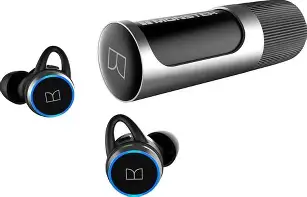
Charging is via USB-C and the case also supports wireless charging — a nice convenience. A 10 minute quick charge gave me about an hour of listening, which proved handy when I was in a rush.
Call quality and microphone performance
Call quality surprised me in a good way. I found my voice came through clearly to others during both indoor and outdoor calls. The mics use a mix of beamforming and environmental noise suppression that keeps wind noise manageable up to light gusts. On very windy streets my voice could get a little breathy, and the earbud's external mics occasionally clip loud noises, but overall performance was solid for work calls and quick calls while walking.
Companion app and firmware
The companion app gives access to ANC strength, EQ presets, a low-latency mode, touch control customization, and firmware updates. I liked having a few EQ presets and a 5-band EQ for minor tweaks, though the EQ is not as granular as some audiophile apps. Firmware updates arrived twice in the months I used the buds — one added a responsiveness improvement to the touch controls and another improved stability when reconnecting to multiple devices. In my experience the updates were painless and the app did not drain battery in the background.
Durability and water resistance
Clarity rates the Airlinks at IPX4, and after several wet runs and heavy sweat sessions they kept working fine. I did not submerge them (and I wouldn’t recommend it), but rain and sweat were non-issues. The matte finish shows a few small scuffs if you toss them in a bag with keys, so I recommend a small protective pouch if you’re rough on gear.
Controls and usability
Controls are touch-sensitive on each bud. Single tap = play/pause, double-tap = next track, press-and-hold toggles ANC/Transparency by default. In practice I liked the touch controls for basic actions, but they sometimes misinterpret a long press during exercise as a swipe. The app allows re-mapping, which helped when I preferred volume control on the stem rather than track skip.
What I appreciated most
- Balanced sound signature: comfortable for long sessions without overly exaggerated bass.
- Reliable ANC for real-world noise: not studio-grade, but excellent for transit and offices.
- Solid call quality: consistent and clear for remote work and calls on the go.
- Comfort and secure fit: stayed put during runs and long meetings.
- Wireless charging and decent battery life: good for travel with occasional quick-charge needs.
What bothered me (real disappointments)
- Battery below the headline claim: I routinely got slightly less runtime than advertised when using ANC and at moderate volumes.
- Ear fatigue over multi-hour sessions: after extended use I felt mild pressure; audiophile over-ears are still the best for marathon listening.
- Touch controls can be finicky: especially during workouts, and the default mapping isn’t always ideal.
- ANC limitations: it handles hum well but doesn’t eliminate sharp, nearby noises.
- Case finish scuffs: the matte plastic shows micro-scratches if you carry it loosely in a bag with other objects.
Pros & Cons
- Pros:
- Comfortable and secure fit for most ears
- Balanced, non-fatiguing sound signature
- Effective ANC for steady noise
- Good call quality in varied conditions
- Wireless charging and quick-charge support
- Cons:
- Real-world battery a bit shy of marketing claims
- Touch controls occasionally unreliable during activity
- ANC doesn’t remove all environmental noises
- Case finish scuffs easily
Quick comparison: Clarity 101 Airlinks vs a few alternatives
| Feature | Clarity 101 Airlinks | Sony WF-1000XM4 (reference) | Apple AirPods Pro 2 (reference) | Budget True Wireless (typical) |
|---|---|---|---|---|
| Price (relative) | Mid-range | Premium | Premium | Low |
| Battery (buds / case) | ~6.5–7h / ~26–28h (real-world) | ~8h / ~24–36h | ~6h / ~30h | 3–5h / 12–20h |
| ANC quality | Good for hums | Class-leading | Very good | Weak or none |
| Sound signature | Neutral-warm, balanced | Detail-forward, rich | Clear, slightly V-shaped | Often bass-heavy or muffled |
| Call quality | Reliable | Excellent | Excellent | Poor to fair |
| App / updates | Yes—EQ and modes | Comprehensive app | Limited app on iOS; system integration | Usually limited or none |
| Wireless charging | Yes | Optional | Yes (MagSafe) | Rare |
| IP rating | IPX4 | IPX4 | IPX4 | Varies (often none) |
Buying guide: is the Clarity 101 Airlinks right for you?
When I recommend earbuds to friends, I ask about their primary use. Here are the questions I used to decide, and that you should consider too:
1. What’s your main use case?
If you mainly need earbuds for commuting, office work, and calls, the Airlinks are an excellent match. If you need absolute top-tier ANC for frequent long-haul flights, a premium alternative may be better.
2. Do you prioritize battery or sound tuning?
I noticed the Airlinks trade a little battery for a pleasant, non-fatiguing sound signature. If you want marathon battery life (10+ hours from the buds alone), look elsewhere.
Find top-rated Audio & Headphones products at great prices.
Shop Amazon →3. Do you need low-latency for gaming?
The Airlinks have a useful Game Mode that reduces latency significantly. For casual gaming and streaming they're fine. For competitive esports, consider wired solutions or specialized low-latency wireless options.
4. How important are call quality and microphone performance?
If you take frequent outdoor calls while walking, the Airlinks do very well. Their beamforming mics handle wind and ambient noise better than many budget options.
5. Do you prefer a neutral or bass-forward sound?
If you prefer bass-heavy signatures for EDM or hip-hop, you may want to use the EQ or consider bass-forward models. I found the Airlinks' balanced sound to be more versatile across genres.
6. Durability and water resistance
The IPX4 rating means they'll survive workouts and rain. If you swim or want a fully waterproof model, these aren’t for that purpose.
Practical tips based on my months of use
- Spend time finding the right tip and wing combination — the best seal improves both sound and ANC dramatically.
- Use the app to tweak the EQ; a small lift around 9–12 kHz brightens vocals without making the sound harsh.
- Turn on the low-latency mode when watching video if you notice lip-sync delays, but switch it off for maximum battery life.
- Carry a soft pouch to protect the case from scratches if you toss it into a bag with keys or coins.
- Install firmware updates when available — I noticed improved reconnection behavior after an update.
Final thoughts and conclusion
After several months with the Clarity 101 Airlinks, they’ve become my default pair for a wide range of day-to-day tasks. What I found was a very practical, well-rounded set of earbuds that excel at the things most people care about: comfortable fit, clear calls, pleasant sound, and useful ANC. They’re not the absolute best in any single category compared to flagship models, but the combination of strengths at a mid-range price point is what makes them feel like a smart buy.
In my experience, the Airlinks are especially compelling for someone who wants reliable performance without the premium price tag and who values comfort and sensible tuning over extreme bass or audiophile flatness. If you want the absolute top-of-the-line ANC or the longest possible battery, look at higher-end alternatives; if you want a trustworthy daily driver that handles work calls, commuting, and workouts with ease, I was pleasantly surprised by how often I reached for the Clarity 101 instead of my other sets.
There are a few real-world annoyances — slightly optimistic battery claims, touch-control quirks, and a case that scuffs — but none of these were dealbreakers for me. Overall, after months of daily use, the Clarity 101 Airlinks earned a regular place in my pockets and routines. They feel like a product made for actual life, with sensible compromises and a focus on usability.